By Carolyn S Dean, Founder and CEO, Trilbii AI
When dental practices talk about AI, two very different conversations often get mixed together. One is about the chair: software that reads radiographs, scribes that draft clinical notes. The other is about everything around the chair: the social posts, the review responses, the policies, the advertising checks and the hundred questions the practice manager answers every week.
Both are useful. They are used by different people, they solve different problems and different rules apply to them. Separating the two makes it much easier to decide what your practice needs first.
The short answer
Clinical AI supports practitioners with diagnosis, imaging and clinical records, and some of it is regulated by the TGA as a medical device. Practice AI supports the practice manager and team with marketing, operations, reviews and advertising checks, and is governed mainly by privacy law and the advertising guidelines. Most practices will use both, chosen and judged in different ways.
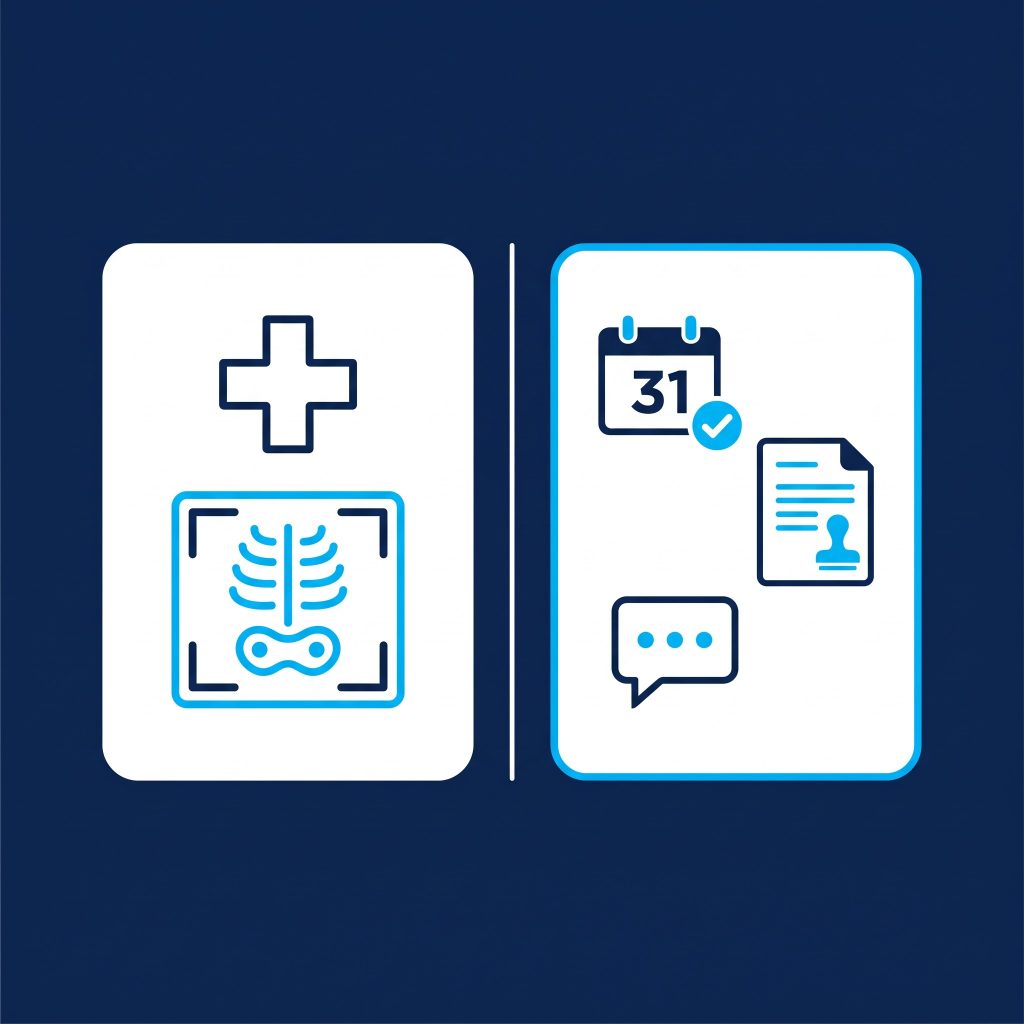
Clinical AI supports the practitioner at the chair: imaging analysis and clinical notes.
Practice AI supports the team around the chair: marketing, operations, reviews and AHPRA advertising checks.
The two side by side
| Clinical AI | Practice AI | |
|---|---|---|
| Main users | Dentists, specialists, hygienists and therapists | Practice manager, front office, marketing lead, owner |
| Typical jobs | Highlighting findings on radiographs, CBCT segmentation, drafting clinical notes and letters | Social posts and blogs, Google review responses, finding answers in manuals and policies, checking marketing against the advertising guidelines |
| Examples | Pearl Second Opinion, Eyes of AI, Heidi for Dentistry, Dentally Clinical AI Notes | Trilbii, Canva Magic Studio, general assistants such as ChatGPT and Claude |
| Main rules | TGA medical device rules where the software informs diagnosis or treatment, the Code of conduct, privacy law, clinical record keeping | Privacy law, the Ahpra advertising guidelines for marketing content, the Code of conduct for patient information |
| Who signs off the output | The treating practitioner | The practice manager or owner, with clinical review where content describes treatment |
| Measured by | Clinical quality, accuracy and chairside time | Hours returned to the team, consistency and turnaround |
Clinical AI: what to know
Clinical AI works with patient health information and supports clinical decisions, so the bar is higher. Software that analyses images or data to support diagnosis or treatment may be regulated by the TGA as a medical device, so check the Australian Register of Therapeutic Goods and the vendor’s regulatory statement. Our guide to how AI software is regulated in Australia explains what to look for.
Ahpra’s guidance on meeting your professional obligations when using AI in healthcare says practitioners remain responsible for the care they provide and must apply their own judgement to AI output. AI scribes add questions about consent and recording, which our guide to AI scribes in a dental practice covers.
Practice AI: what to know
Practice AI works on the business of the practice. The questions to ask are different: does it know your practice, your services and your tone of voice? Does it keep patient information out of places it should not go? Does it help the team check marketing against the Guidelines for advertising a regulated health service? And does it save the practice manager real time each week?
The OAIC’s guidance on privacy and the use of commercially available AI products applies to both sides, and is a good basis for a short AI policy in your operations manual.
In Trilbii: Trilbii is built for the non-clinical side of the practice. It creates social posts and blogs in your practice’s tone of voice, drafts Google review responses, turns your existing manuals, policies and SOPs into answers the team can search, and screens marketing and website content against the AHPRA advertising guidelines, flagging anything that may need attention for your review. Clinical decisions and clinical records stay with your practitioners and your clinical systems. See AI for dental practices.
Once Trilbii is connected to Facebook and Instagram, we really don’t need to go back in. We just push stuff out.
Practice owner, QLD
How they work together
A typical practice might use radiograph AI in the surgery, a scribe for clinical notes, the AI features in its practice management system, and a practice AI tool for marketing and operations. Each has a clear owner and a clear job. The practice management system remains the core record for appointments, patients and billing.
The overlaps are worth noticing. Marketing content that describes a treatment benefits from a clinician’s review before it is published. A practice’s infection control and clinical support procedures belong in the operations manual, written and signed off by the responsible practitioners, and can then be searched by the team like any other document.
Which to start with
Start where the time goes. If clinicians are writing notes late into the evening, a scribe may be the priority. If the practice manager is stretched across marketing, reviews, policies and questions from the team, practice AI usually returns hours fastest. Our ROI article shows how to measure it, and our 30 day plan covers the rollout.
To see how Trilbii supports the practice side, book a personalised demo.
Founding practice offer: for the first 20 practices, Trilbii is $497 per month + GST for as long as you remain continuously subscribed, with the onboarding fee waived and no lock in contract.
Frequently asked questions
Clinical AI supports practitioners with diagnosis, imaging and clinical notes. Practice AI supports the practice manager and team with marketing, operations, reviews and advertising checks. They have different users, different rules and different measures of success.
Software used for marketing, administration and operations generally sits outside medical device regulation. Privacy law, the Code of conduct and the Ahpra advertising guidelines still apply to how it is used.
Trilbii is practice AI, built for the non-clinical side of Australian dental practices: marketing, operations and AHPRA advertising checks. It works alongside your practice management system and any clinical AI you use.
Start with the work that takes the most time or causes the most friction. Measure it for a week or two, choose the tool that addresses it, and review the results after a month.
Related reading
- AI tools for dental practices in Australia: a guide by category
- Is AI software regulated in Australia?
- Using AI scribes in a dental practice
Sources
- TGA, Australian Register of Therapeutic Goods
- Ahpra, Meeting your professional obligations when using AI in healthcare
- Ahpra, Guidelines for advertising a regulated health service
- OAIC, Guidance on privacy and the use of commercially available AI products
- Provider pages: Pearl Second Opinion on EXACT, Eyes of AI, Heidi for Dentistry, Dentally Clinical AI Notes, Canva Magic Studio
Last reviewed 28 October 2026.
As we grow bigger and bigger, we want to make sure the practice isn’t reliant on us. Our processes need to be strong. That’s where Trilbii ties in.
Practice owner, QLD
Two kinds of dental AI
- Clinical AI: imaging analysis and clinical notes, used by practitioners
- Practice AI: marketing, operations, reviews and advertising checks, used by the practice team
Available now
- Marketing: social posts, blogs and Google review responses
- Operations: searchable manuals, policies and SOPs
- AHPRA advertising checks for posts and websites
Founding practice offer: $497 per month + GST for the first 20 practices, onboarding fee waived, no lock in contract.