By Carolyn S Dean, Founder and CEO, Trilbii AI
AI scribes listen to an appointment and draft the clinical notes, so the dentist can focus on the patient instead of the keyboard. They are being adopted quickly in Australian healthcare, and dental versions are now available. Before a practice switches one on, it needs a consent process, a privacy check, a clear rule on reviewing notes and an understanding of where the TGA draws the line.
The short answer
You can use an AI scribe in an Australian dental practice, provided the patient is told and gives informed consent before recording starts, the vendor handles health information in line with the Privacy Act, and the treating practitioner reviews every note before it is saved. The TGA says scribes that only record, transcribe and summarise are not medical devices, while scribes that suggest diagnoses or treatments are likely to be. The practitioner remains responsible for the accuracy of the record.
Before you start:
- A written consent process, including what happens if a patient says no
- A privacy review of the vendor, including where data is stored
- A rule that every note is reviewed before it is saved
- A check of the scribe’s features against the TGA guidance
What an AI scribe does
An ambient AI scribe records the conversation in the room, transcribes it and drafts structured notes for the practitioner to review. Some also draft referral letters or patient summaries. Options available to Australian dental practices include Heidi, which offers a dentistry version and integrates with Core Practice, and Clinical AI Notes in Dentally, which has been available in early access in Australia and New Zealand. Our guide to AI tools for dental practices covers other categories.
Where the TGA draws the line
The TGA’s guidance on digital scribes sets out the distinction:
- Not a medical device: a scribe that only records, transcribes, summarises or drafts notes without adding new clinical content.
- Likely a medical device: a scribe that suggests diagnoses or treatments, triages patients, or generates clinical conclusions that were not stated by the practitioner.
The TGA also notes that a disclaimer does not change the position if the product includes medical device functions, and that practitioners should check again when new features are added.
On 16 October 2026 the TGA published the outcomes of its digital scribe review. It looked closely at 12 products. None of those suppliers had identified their product as a medical device, but on the TGA’s assessment eight included functions likely to meet the definition, two needed more information and two appeared unlikely to be medical devices. The review did not test safety or privacy. Our article on how the TGA regulates AI software explains the wider framework.
Consent comes first
Every source points the same way. The TGA’s guidance for consumers says health professionals should tell patients when a scribe is used, obtain their informed consent, let them withdraw at any time and offer an alternative. Ahpra’s AI case studies say a scribe requires the patient’s explicit consent, and note that recording a conversation without consent may have criminal consequences in some states. The Australian Commission on Safety and Quality in Health Care’s AI safety scenario on ambient scribes recommends disclosing the scribe, documenting consent, and stopping the recording and deleting it if consent is withdrawn.
A good consent process covers:
- What the scribe does and why the practice uses it
- Where the recording and notes are stored, and for how long
- That the dentist reviews the notes before they are saved
- That the patient can say no, or change their mind, with no effect on their care
- Where consent is recorded in the patient file
Example consent script [e.g. “Today I’d like to use an AI tool that listens to our conversation and drafts my notes, so I can focus on you. I check everything before it goes in your file, and the recording is [e.g. deleted once the note is saved]. Are you comfortable with that? It’s completely fine to say no.”] The examples in square brackets can be replaced with your practice’s own wording and process.
State recording laws vary
Recording a private conversation is governed by state and territory surveillance devices laws, and the rules vary. In New South Wales, the Surveillance Devices Act 2007 generally requires the consent of all principal parties to a private conversation. In Victoria, the Surveillance Devices Act 1999 permits a party to record a conversation, but restricts publishing it. Seeking explicit consent from every patient, and anyone attending with them, meets the stricter standard wherever you practise.
Privacy and data
Dental practices are covered by the Privacy Act regardless of turnover, because they provide health services, as the OAIC explains. The OAIC’s checklist for using commercial AI products is a useful starting point for vendor due diligence. Questions to ask a scribe vendor:
- Where are recordings, transcripts and notes stored and processed?
- How long are recordings kept, and can we delete them?
- Is our data used to train or improve the vendor’s models?
- Who at the vendor can access patient information?
- How will we be told about a data breach?
The ACSQHC scenario recommends data is stored in Australia unless the patient has agreed otherwise. Your privacy policy should also mention the scribe.
Accuracy and the clinical record
AI scribes can mishear, omit details or add things that were not said. The Dental Board’s Code of conduct requires practitioners to keep accurate, up to date and legible records, and that responsibility does not change when a tool drafts the note. Ahpra’s guidance is clear that the practitioner remains accountable. The Australian Dental Association’s Policy Statement 6.34 also expects AI output to be reviewed by the practitioner.
In practice, this means reading every draft before saving it, correcting tooth numbers, materials and quantities, and making sure the note reflects what the dentist actually found and discussed.
A practice checklist
| Step | What to do | Who |
|---|---|---|
| 1. Choose the tool | Check features against the TGA guidance and request the vendor’s regulatory statement | Practice owner |
| 2. Privacy review | Work through the OAIC checklist and the vendor questions above | Practice manager |
| 3. Write the procedure | Consent script, where consent is recorded, what to do if a patient declines | Practice manager |
| 4. Update documents | Privacy policy, AI policy and new patient information | Practice manager |
| 5. Train the team | Front desk and clinicians know how to explain the scribe and answer questions | Whole team |
| 6. Review periodically | Check note accuracy and recheck the tool when features change | Dentists and practice owner |
Our guide on introducing AI to a dental practice covers the rollout side in more detail.
Where Trilbii fits
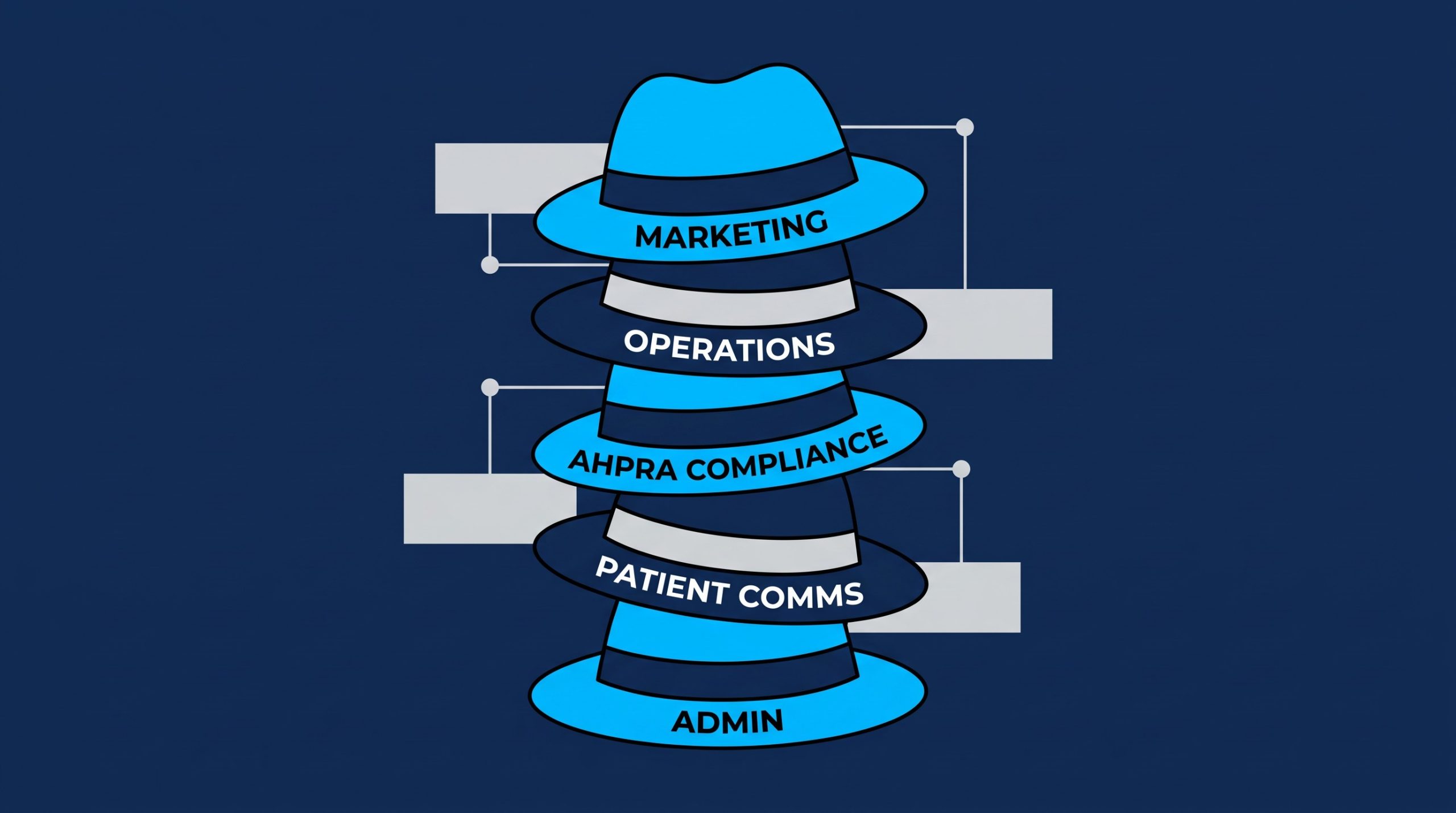
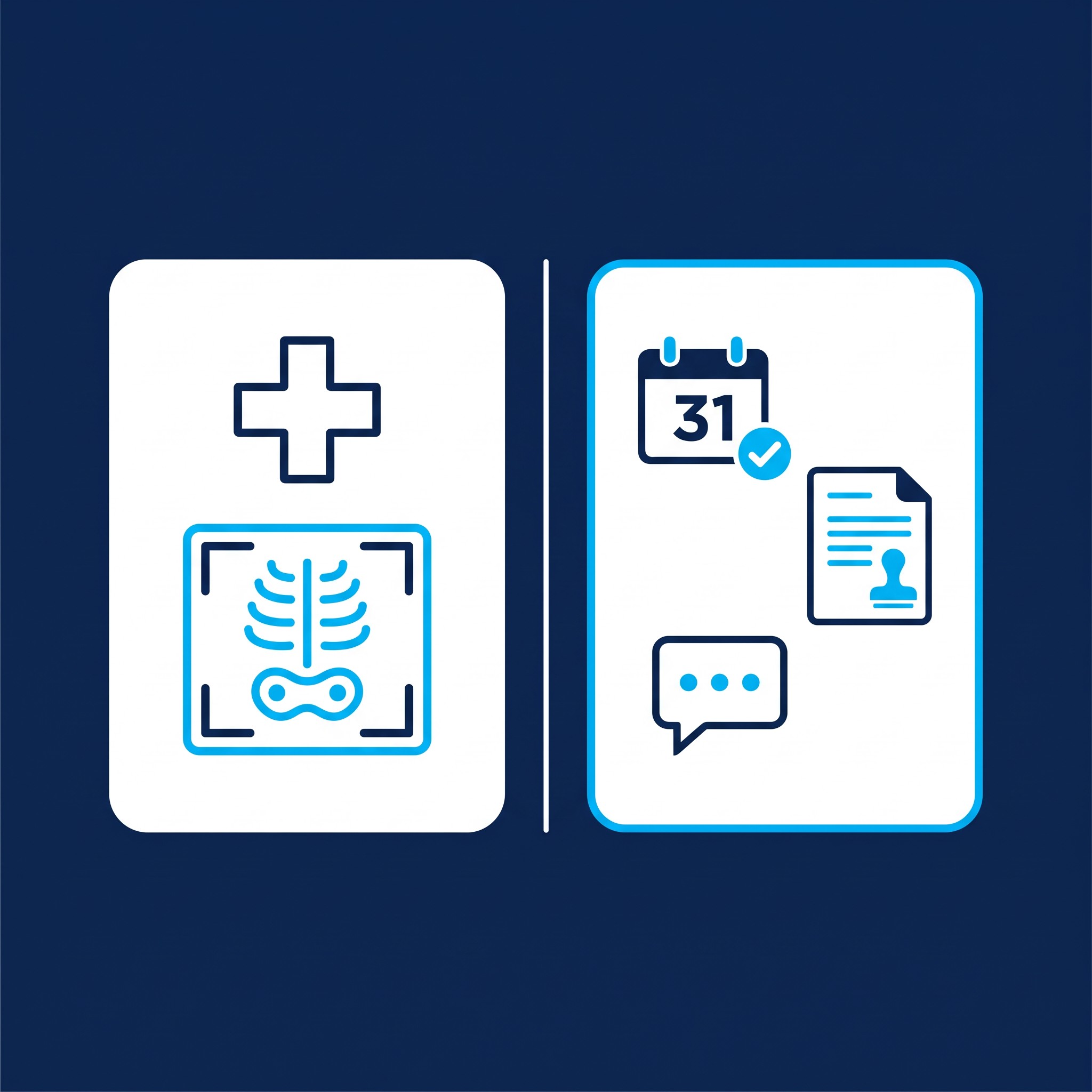
Trilbii is not a scribe. It is built for the non-clinical side of the practice: marketing, operations and AHPRA advertising work. It helps with the procedures that sit around a scribe.
In Trilbii: once your scribe consent procedure, AI policy and privacy policy are in your operations manual, the team can search them and get answers with references back to the source document. When a new receptionist asks what to say if a patient doesn’t want the scribe, the answer comes from your own procedure rather than an interruption to the practice manager. See Trilbii Operations.
“Any time someone needs something, we just go here and find the protocol. It’s all in one spot instead of ‘it’s in the Dropbox… oh no, we put it somewhere else.’” Practice team member, QLD
To see it working on your own documents, book a personalised demo.
Founding practice offer: for the first 20 practices, Trilbii is $497 per month + GST for as long as you remain continuously subscribed, with the onboarding fee waived and no lock in contract.
Frequently asked questions
Yes. The TGA, Ahpra and the ACSQHC all say patients should be told when a scribe is used and give informed consent before recording starts. Patients can decline or withdraw at any time, and should be offered an alternative. Recording without consent may also breach state surveillance devices laws.
A scribe that only records, transcribes and summarises is not a medical device according to the TGA. A scribe that suggests diagnoses or treatments, or generates clinical conclusions, is likely to be one. In its October 2026 review, the TGA found eight of 12 products it examined included functions likely to meet the definition.
The treating practitioner. The Dental Board’s Code of conduct requires accurate records, and Ahpra’s guidance says practitioners remain accountable when using AI. Every draft should be reviewed and corrected before it is saved.
The ACSQHC recommends storing it in Australia unless the patient has agreed otherwise. Ask your vendor where recordings, transcripts and notes are stored and processed, how long they are kept, and whether they are used to train models.
Related reading
- Is AI software regulated in Australia?
- Clinical AI vs practice AI in dentistry
- How to introduce AI to your dental practice
Sources
- TGA, Digital scribes
- TGA, Digital scribe review outcomes, 16 October 2026
- Ahpra, Artificial intelligence in healthcare: case studies
- Australian Commission on Safety and Quality in Health Care, AI Safety Scenario: Ambient Scribe
- OAIC, Checklist: privacy and the use of commercial AI products and Small business
- Victorian Legislation, Surveillance Devices Act 1999
- Dental Board of Australia, Code of conduct
- Australian Dental Association, Policy Statement 6.34: Artificial Intelligence in Dentistry
This article is general information, not legal advice. Last reviewed 28 October 2026.
“As we grow bigger and bigger, we want to make sure the practice isn’t reliant on us. Our processes need to be strong. That’s where Trilbii ties in.” Practice owner, QLD
Scribe essentials
- Informed consent before recording
- Vendor privacy review
- Every note reviewed before saving
- Recheck features against TGA guidance
Available now
- Marketing: social posts, blogs and Google review responses
- Operations: searchable manuals, policies and SOPs
- AHPRA advertising checks for posts and websites
Founding practice offer: $497 per month + GST for the first 20 practices, onboarding fee waived, no lock in contract.