By Carolyn S Dean, Founder and CEO, Trilbii AI
Ask a dental practice owner what AI they use and the answers range widely: software that highlights possible decay on a bitewing, a scribe that drafts clinical notes, a receptionist that answers calls after hours, or a tool that writes the practice’s social posts. These are very different products, used by different people, with different rules around them.
This guide sorts the AI tools available to Australian dental practices into five groups, with examples in each, so you can see where each one fits and what to check before you choose.
The short answer
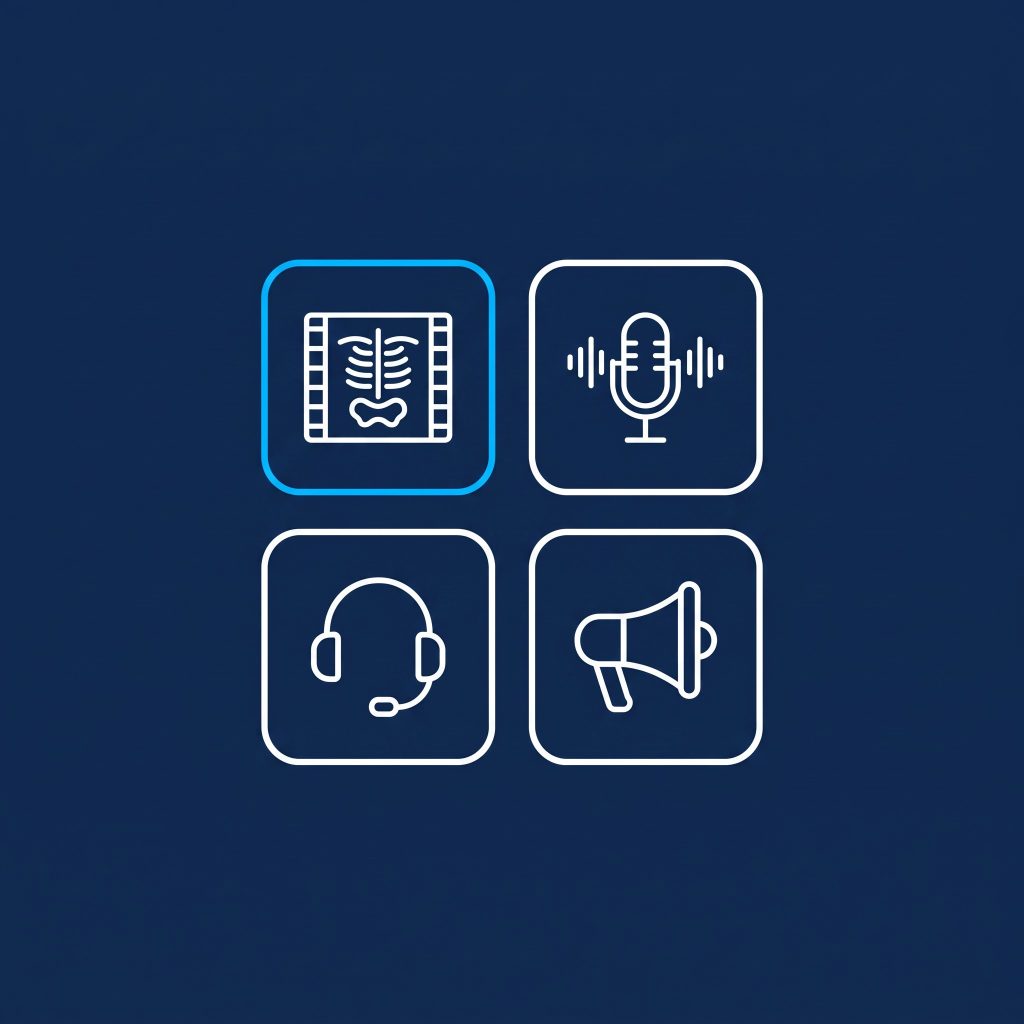
AI tools for dental practices generally fall into five groups: radiograph and imaging AI, clinical notes and scribes, front desk and patient communication, practice management systems with AI built in, and practice admin, marketing and operations tools. Clinical tools are used by practitioners and may be regulated as medical devices. Administrative tools are used by the practice manager and team. Most practices end up with a mix, so it helps to know which group a tool belongs to before you compare it with anything else.
The five groups:
- Radiograph and imaging AI: supports practitioners reading x-rays and scans
- Clinical notes and scribes: drafts clinical notes and letters from the consultation
- Front desk and patient communication: calls, bookings and patient engagement
- Practice management systems with AI built in: AI features inside the PMS
- Practice admin, marketing and operations: the work around the clinical day
1. Radiograph and imaging AI
These tools analyse x-rays and scans and highlight findings for the practitioner to review. They support clinical judgement, and the treating practitioner remains responsible for the diagnosis.
- Pearl Second Opinion flags conditions such as caries, bone loss and periapical radiolucencies on bitewing, periapical and panoramic images. Pearl states it has been cleared by the TGA, it is distributed in Australia and New Zealand through Gamma Tech, and it is available for integration with EXACT. Planmeca Romexis also offers it as a built-in service.
- Eyes of AI is a Sydney-based company with tools that flag findings on OPGs and intraoral films, trace landmarks on lateral cephalograms and build 3D models from CBCT scans.
- Planmeca Romexis includes AI tools for automatic CBCT segmentation, mandibular canal location, 3D cephalometric landmarking and intraoral tooth numbering.
- Carestream Dental CS 3D Imaging Premium includes automated CBCT segmentation, AI-assisted implant planning and crown placement, and matching of CBCT and intraoral scans.
Software that analyses images to support diagnosis may be regulated by the TGA as a medical device. Check the Australian Register of Therapeutic Goods and ask the vendor about its regulatory status. Our guide to how AI software is regulated in Australia explains what to look for.
2. Clinical notes and AI scribes
AI scribes listen to the consultation, with the patient’s consent, and draft clinical notes, letters and summaries for the practitioner to check and approve.
- Heidi Health was founded in Melbourne and offers Heidi for Dentistry, with templates for procedures such as extractions, restorations, crown preparations and hygiene appointments. Heidi also integrates with Core Practice on some plans.
- Dentally Clinical AI Notes turns typed or dictated notes into a structured summary inside Dentally, and was introduced to Australian and New Zealand practices through an early access program.
- Lyrebird Health is an Australian scribe used widely by doctors. Its material focuses on medical practice, so dental practices should check fit before choosing it.
Scribes raise questions about consent, recording and where data is stored. Our guide to using AI scribes in a dental practice covers them.
3. Front desk and patient communication
These tools handle calls, bookings, virtual consultations and patient follow up.
- Principle AI Receptionist answers calls at busy times or after hours, and can book, cancel and reschedule appointments in Principle’s calendar.
- Smilo.ai, founded in Brisbane, offers virtual dental consultations, pre-screening from patients’ smile photos, smile simulations, and SMS and email communication.
- Centaur Software’s D4W Marketing automates recalls and campaigns such as reactivation and new patient welcomes for Dental4Windows and Dental4Web practices. It is automation rather than AI, and it is often the first place a D4W practice looks.
4. Practice management systems with AI built in
Several practice management systems now include AI features or connect to AI tools:
- Dentally includes Clinical AI Notes, along with a short notice list for filling cancellations and integrated HICAPS and Tyro payments.
- Principle includes its AI Receptionist, with further AI features listed as coming soon.
- EXACT offers integration with Pearl Second Opinion alongside its recall and patient communication modules.
- Core Practice connects with AI tools including Heidi.
Our guide to dental practice management software in Australia covers each system in more detail.
5. Practice admin, marketing and operations
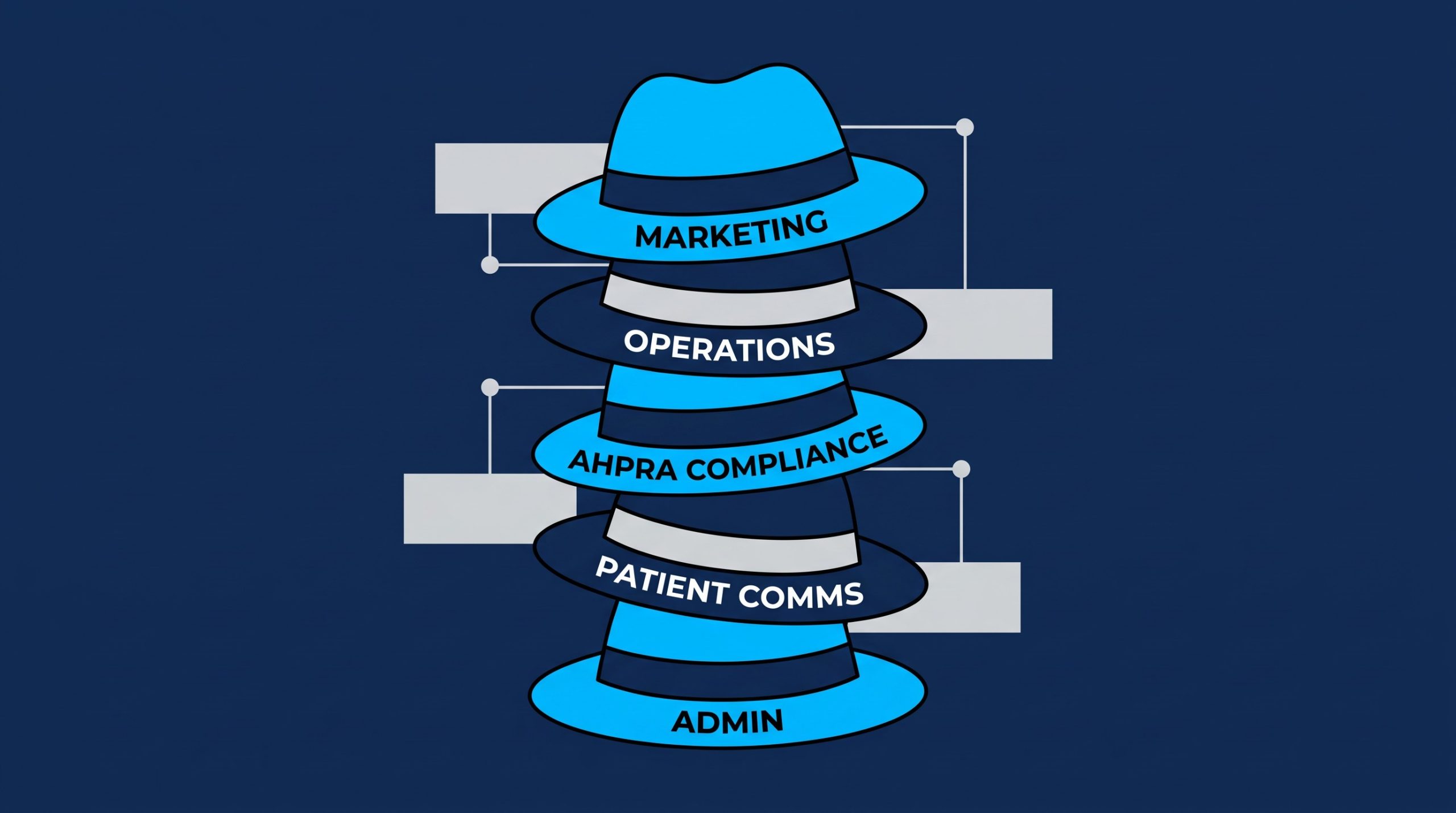
This group covers the work around the clinical day: social posts, blogs, review responses, advertising checks, newsletters, policies and procedures. It usually lands with the practice manager.
- Trilbii is built for the non-clinical side of Australian dental practices: marketing content in the practice’s own tone of voice, Google review responses, searchable operations manuals and AHPRA advertising checks.
- Canva Magic Studio, from Australian company Canva, adds AI design and writing tools for social graphics, brochures and signage.
- General AI assistants such as ChatGPT and Claude are useful for drafting, provided the team knows how to brief them and keeps patient information out of them.
In Trilbii: create social posts and blogs in your practice’s tone of voice, respond to Google reviews, search your practice manuals, policies and SOPs for answers with references back to the source document, and screen posts and web pages against the AHPRA advertising guidelines, with anything that may need attention flagged for your review. See AI for dental practices.
Any time someone needs something, we just go here and find the protocol. It’s all in one spot instead of ‘it’s in the Dropbox… oh no, we put it somewhere else.’
Practice team member, QLD
What to check before you choose any AI tool
- Who will use it, and for what job? Start with the task, then find the tool.
- Is it a medical device? For clinical tools, check the ARTG and the vendor’s regulatory statement.
- Where is the data stored, and is it used to train models? The OAIC’s guidance on commercially available AI products is a useful checklist.
- Who reviews the output? Ahpra’s guidance on using AI in healthcare says practitioners remain responsible for what they use AI to produce.
- Does it work with your practice management system? Ask what connects today and what is planned.
Our article on clinical AI and practice AI explains how the two sides fit together, and our 30 day plan for introducing AI covers the rollout.
Where Trilbii fits
Trilbii sits in the fifth group. It works alongside your practice management system and any clinical AI you use, and helps with the marketing, operations and AHPRA advertising work that takes up so much of a practice manager’s week. Trilbii is a member of the Centaur Software Partner Network, with Dental4Windows and Dental4Web integration forming part of what comes next.
To see it working on your own content, book a personalised demo.
Founding practice offer: for the first 20 practices, Trilbii is $497 per month + GST for as long as you remain continuously subscribed, with the onboarding fee waived and no lock in contract.
Frequently asked questions
They generally fall into five groups: radiograph and imaging AI such as Pearl Second Opinion and Eyes of AI, AI scribes such as Heidi Health, front desk tools such as Principle’s AI Receptionist, practice management systems with AI features such as Dentally, and practice admin and marketing tools such as Trilbii and Canva Magic Studio.
Software that analyses images or data to support diagnosis or treatment may be regulated by the TGA as a medical device. Check the Australian Register of Therapeutic Goods and the vendor’s regulatory statement. Administrative and marketing tools are generally outside medical device regulation, although privacy law and the advertising guidelines still apply.
Trilbii is built for the non-clinical side of the practice: marketing, operations and AHPRA advertising checks. Practices use clinical AI tools alongside it for imaging and clinical notes.
Many practices use general AI assistants for drafting. Keep patient information out of them, review every output before it is used, and check marketing content against the advertising guidelines before it is published.
Related reading
- Clinical AI vs practice AI in dentistry
- Is AI software regulated in Australia?
- Using AI scribes in a dental practice
- The ROI of AI in a dental practice
Sources and provider links
- Pearl Second Opinion on EXACT Australia and Pearl and Gamma Tech announcement
- Eyes of AI; Planmeca Romexis AI tools; Carestream Dental CS 3D Imaging Premium
- Heidi for Dentistry; Lyrebird Health
- Dentally and Clinical AI Notes; Principle AI; EXACT; Core Practice
- Smilo.ai; Centaur Software D4W Marketing
- Canva Magic Studio; ChatGPT; Claude
- TGA, Australian Register of Therapeutic Goods; OAIC, Guidance on privacy and the use of commercially available AI products; Ahpra, Meeting your professional obligations when using AI in healthcare
Provider details were checked against each provider’s own website. Features change, so confirm current details and regulatory status directly with each provider. Last reviewed 28 October 2026.
As we grow bigger and bigger, we want to make sure the practice isn’t reliant on us. Our processes need to be strong. That’s where Trilbii ties in.
Practice owner, QLD
Five groups of dental AI
- Radiograph and imaging AI
- Clinical notes and scribes
- Front desk and patient communication
- Practice management systems with AI
- Practice admin, marketing and operations
Available now
- Marketing: social posts, blogs and Google review responses
- Operations: searchable manuals, policies and SOPs
- AHPRA advertising checks for posts and websites
Founding practice offer: $497 per month + GST for the first 20 practices, onboarding fee waived, no lock in contract.