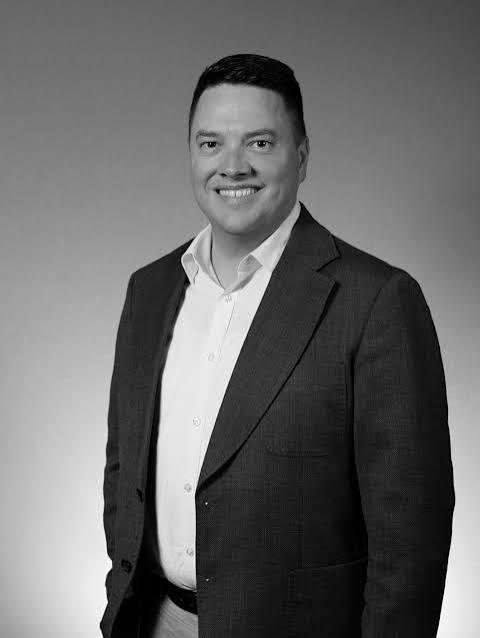
While researching what to build, Carolyn S Dean visited a practice that was working well. Good team, good patients, good systems, the sort of practice other owners point to as an example. She spent half an hour asking what their problems were and came away with almost nothing.
Then she showed them what she was building.
This solves issues that we have, that we didn’t talk to you about.
The practice had not been hiding anything. They had simply stopped naming those problems, because the problems had become the background texture of the working week.
No matter how good a practice is, there are still issues.
That finding sits underneath why Trilbii AI exists, and underneath the rest of this interview with Carolyn S Dean: who she is, why she and her co founder are the ones building it, and what else she found when she went looking for the real problems inside Australian practices.
Health is a personal business
Running any business is difficult. Running a healthcare practice adds a constraint that most businesses do not have.
Running a business is hard. Full stop. But then imagine that you’re running a business, but to make it economically viable you have to, the owner has to see patients all day, every day, to make it financially viable. That is a very hard business model.
The person accountable for marketing, hiring, compliance, cash flow and strategy is clinically occupied for exactly the hours in which those things would normally get done. The business work moves to evenings and weekends.
Carolyn also pushes back on the idea that healthcare is an ordinary small business with a stethoscope on it.
We’re not talking about selling a hat. Health is a very personal business.
People from the outside look at health, look at dental, and they think it’s a very easy business, where actually the complexities of treatment, that people are literally in your face.
The intimacy of the work changes the commercial rules, and it starts before anyone reaches the surgery.
If you don’t have the right people answering the phones, people won’t book in.
Two careers that never usually meet
Carolyn describes her working life as two halves. The first was IT and technology. The second was health and medical marketing, close to 20 years of it, consulting to practices and running marketing for large groups.
Those two halves are usually held by different people, and that is part of why the gap she is now building into stayed open for so long. Somebody who understands the technology rarely understands how a practice actually runs its week, and somebody who understands the practice rarely has the technical background to build anything for it. Trilbii AI is the point where the two halves meet.
Carolyn saw the problem from the outside, as a consultant and as head of marketing for large groups. Her co founder Anthony Middlemiss saw it from the inside.
Anthony owned and ran his own allied health practice for 20 years. He did not close it, and he did not sell it because the clinical work stopped being rewarding.
He sold it because of the overwhelm that he had running a practice.
Seeing patients, running the business and doing the marketing, at once, for two decades. That is the experience Trilbii is built out of, and it is the answer to the question of why these two people rather than any other two.
There is a second half to the founding story. For two and a half years Carolyn had been presenting on AI in the dental field, telling practices what they should be doing with it, and waiting for somebody else to build the tool that would let them.
For two and a half years I’ve been presenting on AI in the dental field, thinking that somebody would produce a tool. And nobody did.
Nobody did. So she went and built it. In her own words about the decision: “It’s a bit crazy.”
Why the company is named after a hat
Trilbii is named after a hat, and the reason is the whole product thesis in one image.
A practice wears a marketing hat, an operations hat, a compliance hat, an HR hat and a finance hat, and in most practices those five hats sit on one or two heads. The owner is a clinician. The practice manager is usually a long serving team member who was promoted for knowing the practice rather than for any formal business training.
The practice owner and the practice manager typically aren’t business people. They don’t have the business training or they don’t have the marketing training.
They have to wear all of these hats. But they don’t have the skills. They don’t have the training.
Carolyn is careful that this is not a criticism of anybody. It is a description of how the industry is built. Nobody teaches a dentist how to run a business before handing them one.
Compliance carries the biggest risk for the least visible reward
Of all the hats, compliance carries the most financial risk for the least visible benefit.
AHPRA’s advertising guidelines are not only about broad claims. They are about particular words and particular phrases, and they are revised over time.
There are specific things that you can say and things you can’t say. So there’s words, there’s phrases that are against the advertising laws.
Penalties for advertising offences under the Health Practitioner Regulation National Law run to tens of thousands of dollars. The National Law was amended during 2025 and the penalty provisions were among the areas revised, so the current figures are worth reading on AHPRA’s own advertising hub rather than in a marketing summary.
The exact number matters less than the shape of the risk. Getting the wording right earns a practice nothing. Getting it wrong is expensive. And no clinician with a full book can hold every rule in their head, apply it evenly across a website written by several people over several years, and keep doing that as the guidance moves.
It’s very hard to stay ahead of all of these individual rules.
This is what Trilbii’s compliance checking is for. Every page and every sentence of a practice website is read against the advertising guidelines. Where something breaches, it names the mistake, points to where it sits in the guidelines, and suggests wording that complies.
The overwhelm nobody accounts for
Burnout among Australian dental practitioners is well evidenced. Peer reviewed work by Hopcraft and colleagues, published in 2023 in the Australian Dental Journal and the Journal of Public Health Dentistry, documents burnout and psychological distress across the profession.
What that literature measures is burnout broadly. It does not isolate the admin burden as the cause. Carolyn’s contribution is the practice level observation that a large share of the load sits in the back office rather than in the surgery: paperwork, compliance, rosters, marketing, recruitment, the parts of the week nobody trained anybody for.
That reframing matters commercially. Clinical workload is difficult to reduce. Admin workload is not.
I don’t know where AI lands. Nobody does
Carolyn repeats a comparison she hears often: that AI is the steam engine, electricity and the internet arriving at the same time, and that the speed of change is beyond anything previously experienced.
What she will not do is claim to know where it lands.
I don’t know where we end with AI. I don’t think anybody does. But what I do know is it’s here, and it’s changing.
I see huge risk.
She sees the opportunity as well, and her position sits between the two. The practices that test AI now, on real recurring tasks, will not be the ones catching up in two years. Waiting for certainty is a decision with its own cost.
The mission: give practices their time back
Trilbii deals with the non clinical side of practice life: marketing, operations, compliance, HR and admin. It goes nowhere near clinical decisions or patient diagnosis, and Carolyn is direct about that boundary.
The mission she states is to take the admin burden away and give practices their time back, and to put business, marketing and HR skills within reach of a team that was never trained in any of them.
It is also being built with practices rather than at them, on research spanning hospital surgeons, small independent practices and large groups. That research is why the practice with no problems has a story worth telling at all.
It will never replace any humans
The objection every practice owner raises, usually before the second question, is whether this replaces people. Carolyn answers it without hedging.
But it will never replace any humans.
The reason is not diplomacy. It is a design decision that follows from how the technology behaves. AI hallucinates. It can make mistakes and it can make things up, and in a regulated healthcare setting that is not a small matter. So checks sit at every step, and the last of them is always a person.
The final step has to be a human check.
It is worth noticing what she is doing there. In a promotional interview about her own AI product, she names the weakness of the category she sells into. That is the most trust building thing said in the conversation.
In five years, less a tool, more a colleague
Asked where Trilbii is in three to five years, Carolyn describes something closer to a colleague than a subscription. Not a tool a practice logs into occasionally, but part of how the practice works: sitting inside the workflow, thought of as part of the team, the place the practice goes when a hat needs wearing and nobody has the hours or the training to wear it.
Her own summary of what drives it is short.
We are very, I guess, obsessed with solving problems.
Watch it again
The full interview is on YouTube: watch it here.
We are building Trilbii in conjunction with practices. If you want the problems in your practice to shape what gets built, we want to hear about them.
Related reading: nobody teaches a dentist how to run a business.
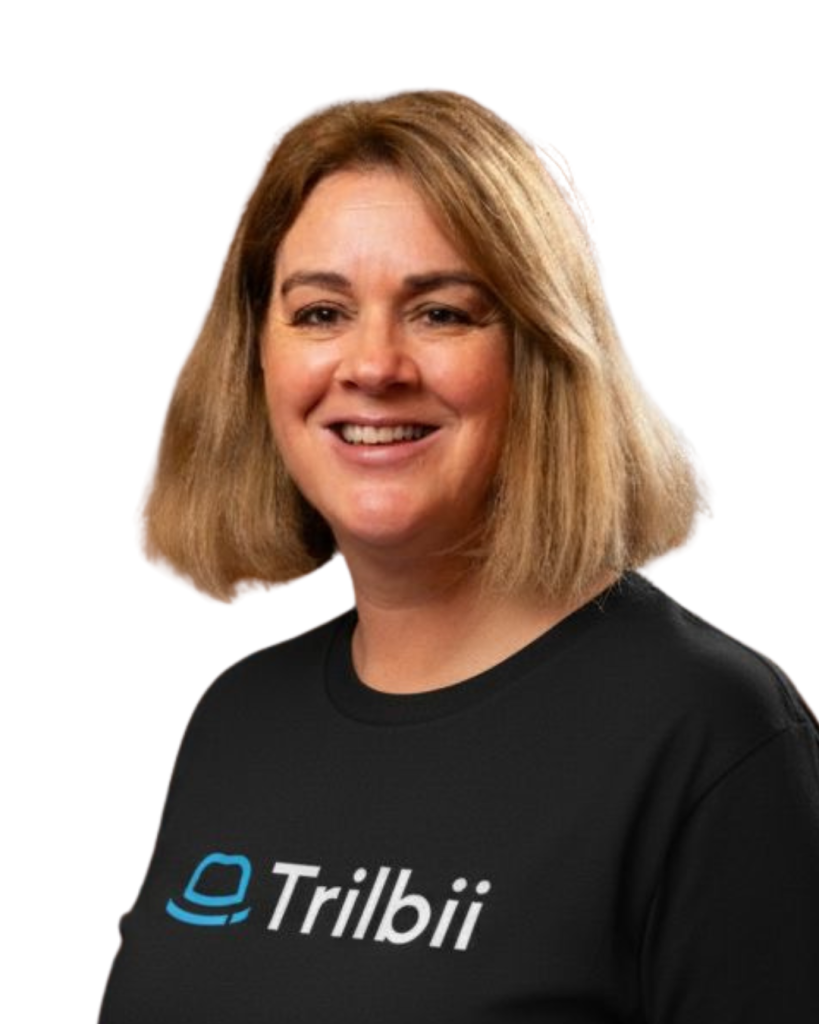
No matter how good a practice is, there are still issues.
Carolyn S Dean, Trilbii AI
From an interview with Carolyn S Dean, founder of Trilbii AI.