By Carolyn S Dean, Founder and CEO, Trilbii AI
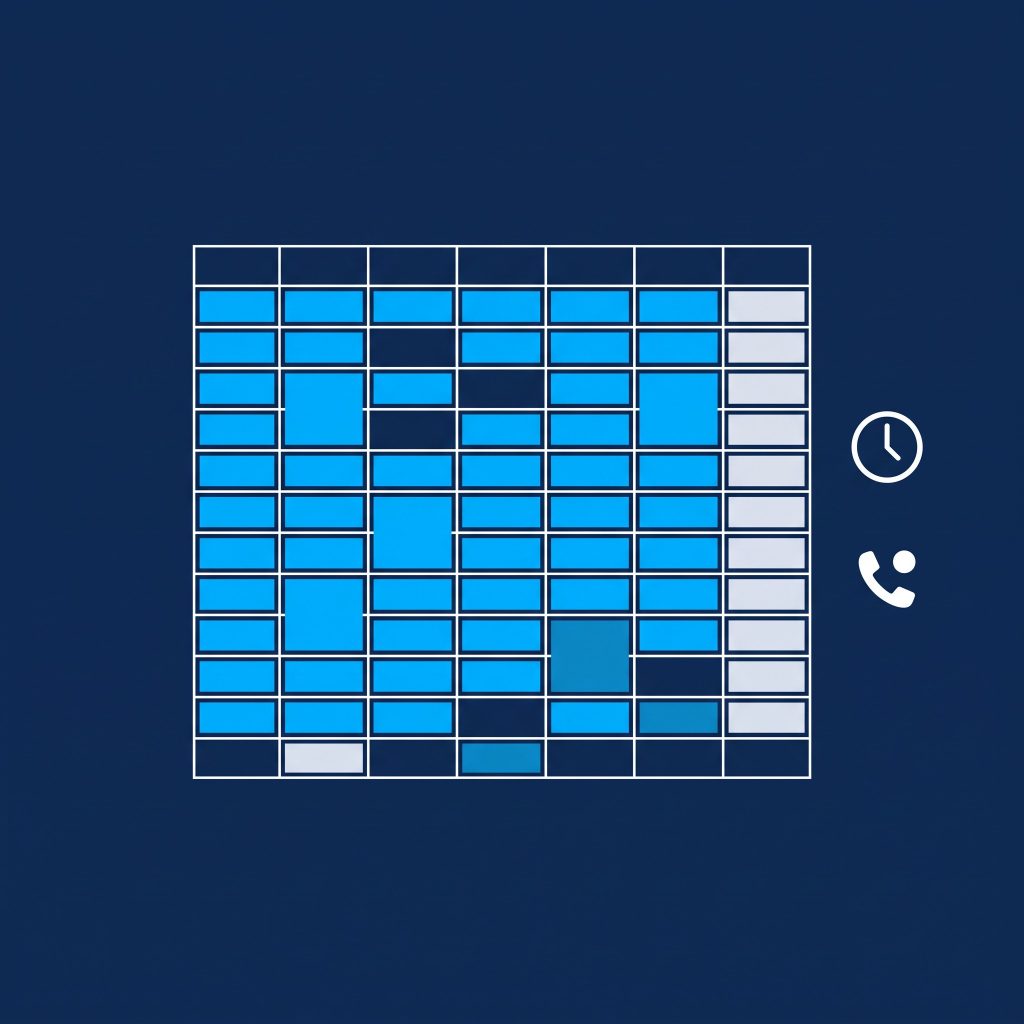
The appointment book is where clinician hours become productive hours, or don’t. Two practices with the same team and the same patient base can finish the month with very different results simply because one designs its book in advance and the other fills whatever is left.
This guide covers the appointment book section of a dental operations handbook: how to pre block the day, what a healthy book looks like, a daily routine for filling gaps, a reminder sequence, and a consistent approach to late arrivals and missed appointments. The figures come from a sample practice handbook and are starting points to adjust for your own service mix, patient profile and team.
The short answer
Design each clinician’s day before reception fills it: a morning huddle, at least two new patient slots, one emergency slot, and treatment blocks placed so shared equipment is never double booked. Track how full the book is against set targets for today, this week and the next fortnight. Work a short call list every day from the standby, recall and overdue treatment lists. Confirm appointments in the patient’s preferred channel, follow up anyone who has not responded, and handle late arrivals and missed appointments the same way every time.
1. Pre block the day
Pre blocking leaves the right shape of time for the right type of appointment, so reception can fill the book without making a judgement call on every booking. Sample rules from the handbook:
- Open the day with a [e.g. 5 to 10 minute] team huddle.
- Place at least [e.g. two] new patient appointments per dentist per day, one in the first slot after the huddle and one first after lunch.
- Keep at least one emergency slot each day, ideally just before lunch or at the end of the day so an overrun affects nobody else.
- Set lunch and training time as non working hours so they do not appear as gaps in PMS reporting.
- Add treatment blocks (root canal treatment, crowns, implants) with each clinician, based on equipment such as the scanner or endo motor.
- Allow longer appointment times for new graduates for their first [e.g. three to six months].
In a three chair practice with one scanner and one endo motor, this means the book never has two clinicians booked for crown preps or root canal treatment in the same hour.
Book each appointment type with the right practitioner
Pre blocks should reflect who provides each service in your practice. The Dental Board of Australia’s Guidelines for scope of practice explain that each practitioner works within their division (dentist, dental hygienist, dental therapist, oral health therapist or dental prosthetist) and within their own education, training and competence. Hygiene columns, for example, are built around the care your hygienists and oral health therapists provide, with exam handovers to a dentist where needed. Writing these rules into the handbook means a new receptionist books correctly from their first week.
In Trilbii: upload your handbook, booking rules and policies, and reception can search them for answers, with references back to the source document. See Operations Manuals for dental practices.
Any time someone needs something, we just go here and find the protocol. It’s all in one spot instead of ‘it’s in the Dropbox… oh no, we put it somewhere else.’
Practice team member, QLD
Decide what patients can book online
Online slots should match what reception would offer over the phone. Sample appointment types the handbook treats as suitable for online booking:
| Appointment type | Sample length | Note |
|---|---|---|
| New patient check up, clean and exam | [e.g. up to 60 minutes] | |
| New patient emergency | [e.g. 30 minutes] | Reception calls to confirm the nature of the emergency |
| New patient consult or referral | [e.g. 30 minutes] | |
| Existing patient check up and clean | [e.g. up to 45 minutes] | |
| Existing patient emergency | [e.g. 30 minutes] | Reception calls to confirm |
| Ortho, implant or cosmetic consult | [e.g. 30 minutes] |
Complex, multi visit treatment stays with reception, where it can be booked against the pre blocks and the equipment plan.
2. Set targets for how full the book should be
Gap management works best against a clear picture of what “healthy” looks like. Sample targets:
| Time frame | Sample target |
|---|---|
| Current week, at the start of the week | [e.g. 85 per cent] booked |
| End of each day and week | [e.g. 95 per cent or more] booked |
| Next five working days | [e.g. 75 per cent] booked |
| The ten working days after that | [e.g. 60 per cent] booked |
| Kept free for emergencies | [e.g. around 5 per cent] |
3. A daily routine for filling gaps
- Check today’s gaps first thing, then tomorrow, next week and next month, in that order.
- Call patients on the standby list, using what you know about their availability [e.g. children after school, retirees at short notice, patients who live nearby].
- Build a call list from patients due for recall and patients with overdue treatment, and make at least [e.g. 10] outbound calls a day.
- Bring patients forward when lab work arrives earlier than expected.
- Prioritise existing patients with overdue treatment.
- When gaps stay low and the standby list keeps growing, raise extended hours with the owner.
Short, specific scripts help. For example: “Hi [name], this is [your name] from [practice]. Your lab work has come back early and we can see you sooner. Would [new date] suit you?”
4. A reminder and confirmation sequence
Reminders work when they are consistent, sent in the patient’s preferred channel, and followed up when there is no reply.
| When | What | Channel |
|---|---|---|
| At booking | Record the patient’s preferred channel in the PMS | Per patient |
| [e.g. 14 days] before | Reminder for hygiene appointments | SMS or email |
| [e.g. 7 days] before | First confirmation | SMS or email |
| [e.g. 2 days] before | Second confirmation | SMS or email |
| 1 day before, no reply | Personal contact through another channel | Phone, then SMS or email |
| Final attempt | A clear message that the time will be offered to another patient if not confirmed by [e.g. 8 am] | Phone and SMS |
When several family members are booked together, one message addressed to the parent or guardian that names each child is clearer than separate texts.
Keep reminders and marketing separate
Appointment reminders and marketing messages are different communications. Under the Spam Act, commercial messages need consent, must identify the practice and must include a working unsubscribe option, and the ACMA states that unsubscribe requests must be honoured within five working days. Record marketing consent separately in the PMS so a patient who opts out of newsletters still receives their appointment reminders. The OAIC’s guidance on communications with patients is a useful reference for what to include in an SMS or voicemail.
5. Late arrivals, cancellations and failed appointments
Missed time affects other patients as well as the practice, so the same steps apply every time. The practice manager keeps discretion for genuine hardship.
| Situation | Action |
|---|---|
| Patient is [e.g. 5 minutes] late | Reception phones to check, captures an arrival time and updates the clinician |
| Patient arrives late | The clinician decides whether the appointment can go ahead in the time left; reception explains the outcome |
| Patient forgot (FTA) | Reschedule, mention the bookings policy, record the FTA in the PMS |
| No answer | Leave a message, send an SMS, record it in the PMS |
| Cancellation within [e.g. 48 hours] (UTA) | Reschedule, mention the bookings policy, record the UTA in the PMS |
The sample handbook suggests a non refundable deposit of [e.g. $50] after [e.g. two] UTAs or FTAs in a calendar year without a valid reason. Whatever you choose, set the thresholds before the handbook is issued, explain them when patients book, and include the policy in the new patient welcome pack.
Review it periodically
Revisit the appointment book design each quarter, or whenever clinician hours, equipment or services change. Track waiting times for a sample week each quarter as well: if one clinician regularly runs late, the appointment lengths or pre blocks usually need adjusting.
Where Trilbii fits
Rules like these live in a handbook, and the handbook needs to be at hand when the phone rings. Trilbii’s Operations Manuals tool turns your practice’s own handbook, SOPs and policies into answers. During onboarding we add your documents to Trilbii, and anyone in the team can then ask a question in plain language and get your practice’s answer with the source it came from.
To see how it works with a handbook like yours, book a personalised demo.
Founding practice offer: for the first 20 practices, Trilbii is $497 per month + GST for as long as you remain continuously subscribed, with the onboarding fee waived and no lock in contract.
Frequently asked questions
Pre blocking reserves set times in each clinician’s book for specific appointment types, such as new patients, emergencies and longer treatment, before reception starts booking. It helps the practice keep the right mix of appointments and avoid double booking shared equipment.
An FTA (failed to attend) is a patient who does not come to their appointment. A UTA (unable to attend) is a cancellation made at short notice, commonly within 48 hours, although each practice sets its own window.
A common starting point is at least two per dentist per day, one after the morning huddle and one after lunch. The right number depends on your new patient demand and each dentist’s capacity.
Yes. Record marketing consent separately from reminder preferences. Under the Spam Act, unsubscribe requests for commercial messages must be honoured within five working days.
A sample target is around 85 per cent booked at the start of the current week and 95 per cent or more by the end of each day, with around 5 per cent kept free for emergencies. Adjust the figures to suit your practice.
Related reading
- Dental operations manual: what to include and how to build one
- Dental front desk training manual: what to include
Sources
- Dental Board of Australia, Guidelines for scope of practice
- Australian Communications and Media Authority, Avoid sending spam
- Office of the Australian Information Commissioner, Communications with patients and Guide to health privacy
As we grow bigger and bigger, we want to make sure the practice isn’t reliant on us. Our processes need to be strong. That’s where Trilbii ties in.
Practice owner, QLD
Available now
- Marketing: social posts, blogs and Google review responses
- Operations: searchable manuals, policies and SOPs
- AHPRA advertising checks for posts and websites
Founding practice offer: $497 per month + GST for the first 20 practices, onboarding fee waived, no lock in contract.